
Ana And: Light, Aura, and the Matter of the Invisible
Research and writing: Area Temporal Editorial TeamArchive: Artistic Mapping Open Call 2026
Ana Paula Bezerra Andreiolo, known as Ana And, approaches the image not as representation, but as a field of emergence. From her base in Lisbon — at her studio O-Culto, located in Bairro Alto — the artist develops an investigation that extends beyond the visual and into the perceptual: that which never fully reveals itself, yet persists.
Her work inhabits a zone of friction between drawing, expanded photography, and alchemical processes such as salt printing. More than technical procedures, however, these operations function as dispositifs of unveiling. Within them, the image is not produced but summoned; it is not constructed through form, but through the tension between presence and disappearance.

In this sense, the notion of light in her work is neither merely physical nor optical. Light operates as an agent of revelation, but also as a force of erasure. To illuminate, within her practice, does not mean to render fully visible, but to activate the threshold at which visibility itself begins to decompose. The image thus becomes unstable, almost spectral: it appears as trace, residue, or vibration not yet fully fixed.
It is within this intermediate space that her relationship to aura may be understood. Far removed from the notion of aura as a marker of authenticity or uniqueness, aura here emerges as an unstable condition of appearance: an atmospheric density surrounding the image without fully belonging to it. In Ana And’s works, aura does not reside in the object, but in the process of emergence itself. It is a fragile, temporal quality dependent upon the continuous transformation of matter.

The artist works with materials that do not behave as passive supports, but as active agents: they impregnate, evaporate, irradiate, burn, and dissolve. In this sense, matter does not illustrate the image; it produces it through its own resistance. Each operation becomes an act of negotiation between the visible and that which insists on remaining hidden.
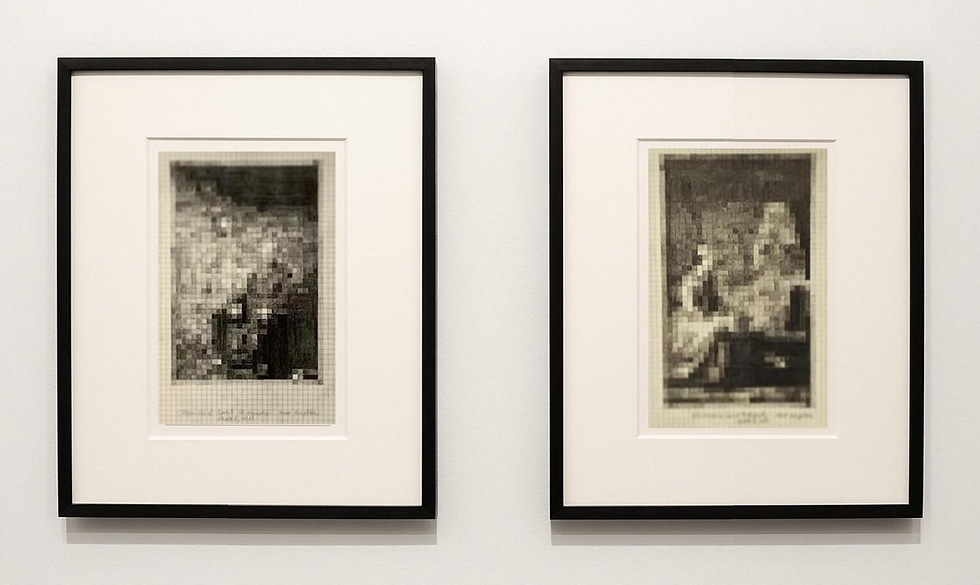
Her investigation, rooted in an expanded practice between Brazil and Europe, may be read as an archaeology of the immaterial. Through gesture, trace, and emergence, Ana And constructs a poetics in which mystery is not content, but a structural condition of the image itself.
Her work thus proposes a suspension: a temporality in which light never fully reveals and matter never stabilizes. Within this interval, the image breathes. And within that breath — brief, unstable, almost imperceptible — the true territory of her practice takes shape: a space where the invisible is not absence, but active potential.


Comments