
Gustavo García Murrieta: Ritual, Dissidence, and Technology as Territories of Symbolic Translation
Updated: May 9
Editorial research and writing: Area Temporal Editorial TeamArchive: Open Call — Artistic Mapping 2026
Gustavo García Murrieta’s practice emerges from a territory resistant to classification. His work does not seek to stabilize symbols or fix meaning; rather, it operates through the friction between languages, temporalities, and systems of belief historically separated by Western structures of representation. In this sense, the artist’s oeuvre may be understood as a practice of symbolic translation: a space where ritual, technology, popular spirituality, and queer thought coexist as active forces within a shared visual structure.
Far from approaching syncretism merely as an aesthetic reference, García Murrieta employs it as methodology. His installations, performances, sculptures, and graphic works function as dispositifs in which images acquire a ritual condition rather than a representational one. Within them, spirituality does not appear as folklore nor as anthropological reconstruction, but as a contemporary experience traversed by bodies, affects, and collective memory.

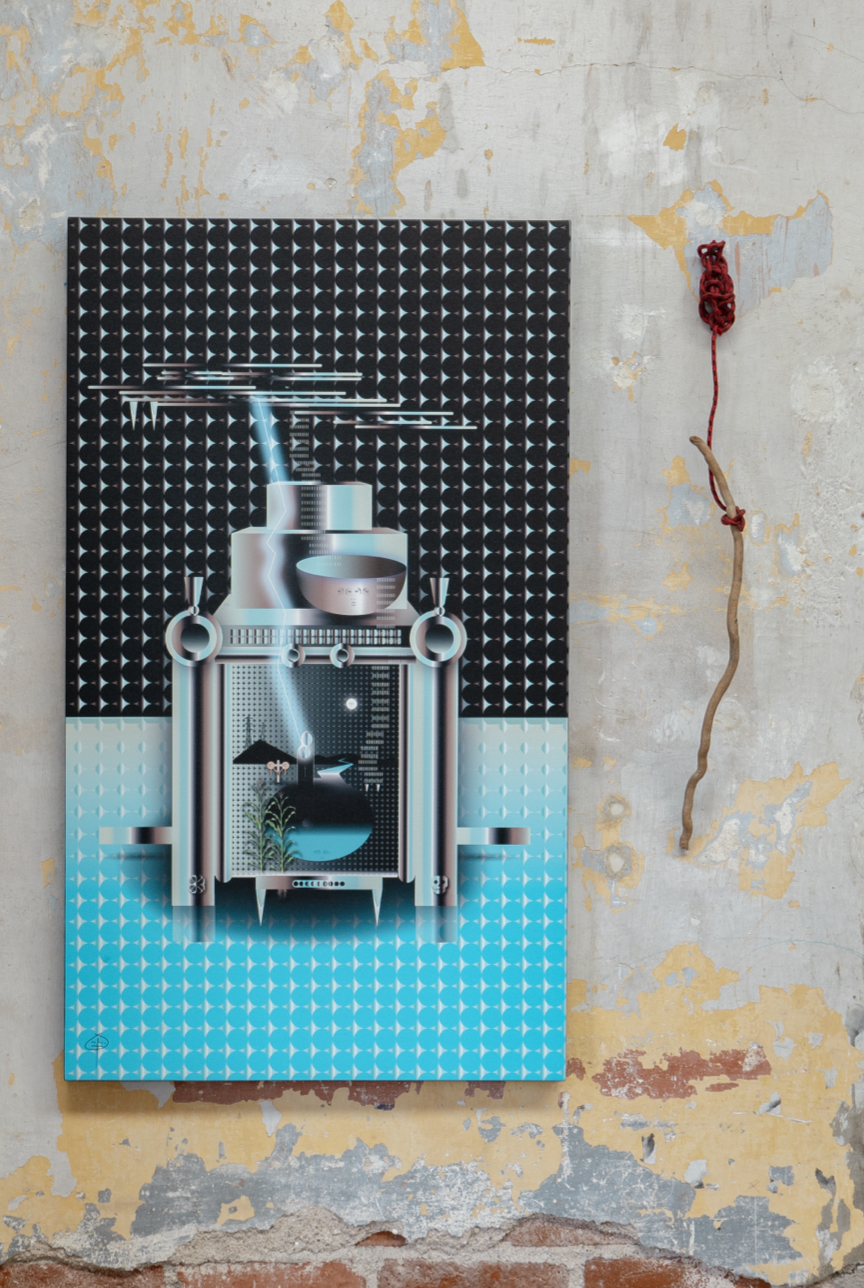
Much of his practice seems to ask what occurs when rural, religious, and popular symbolic practices are displaced from the realm of tradition and reinserted into the field of contemporary art. This operation does not emerge from distant appropriation, but from an affective proximity to the communal imaginaries of Mexico and Latin America. The artist understands these forms of knowledge as living cultural technologies, capable of generating sensibility, knowledge production, and alternative modes of relating to the environment.
In recent works connected to water, earth, and popular deities, the body appears as a mediating channel between matter and symbol. His performances activate transitional states in which identity ceases to function as a stable category and instead behaves as a porous surface permeable to natural, spiritual, and collective forces. Within these actions exists an almost ceremonial dimension that transforms the exhibition space into a territory of invocation and shared experience.

Another central aspect of his practice lies in the relationship between materiality and memory. His current sculptural research involving tezontle introduces a geological and territorial reading that dialogues with the historical strata of Mexico: volcanic stone, ritual body, and symbolic architecture converge as elements of resistance against the homogenizing narratives of modern progress. In this context, the digital technologies employed in his graphic processes do not stand in opposition to the ancestral; rather, both dimensions coexist within the same hybrid ecosystem through which contemporaneity is redefined from non-linear perspectives.
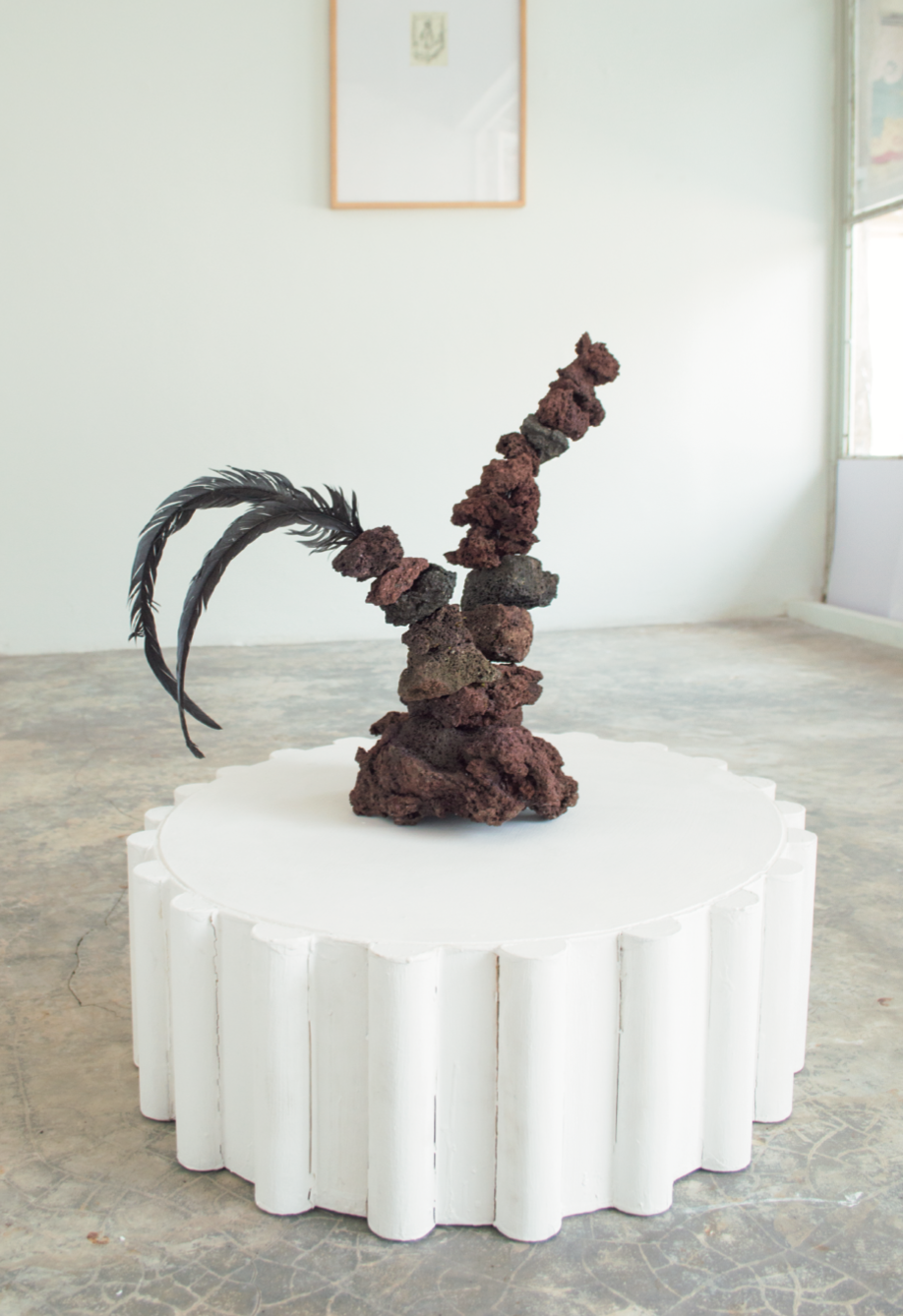
García Murrieta’s work also proposes a critical reconsideration of the categories separating art, craft, and ritual. His practice destabilizes these divisions by recognizing communal and spiritual practices as legitimate forms of aesthetic and political production. From this perspective, his research not only expands the field of contemporary visuality, but also raises questions regarding who holds the authority to determine which forms of knowledge become visible within the art system.
Rather than producing closed objects, the artist appears to construct scenarios of symbolic transformation: spaces where the body, nature, and spirituality operate as active agents capable of interrupting the rational and colonial logics that continue to structure much of contemporary thought.


Comments